Showing posts with label cryptocurrencies. Show all posts

Thursday, 13 May 2021

Cryptocurrencies' value continues to drop


With regards to my previous post about cryptocurrencies' regulation, I have just learnt that the American clean energy company based in Palo Alto, Tesla Inc., will no longer accept bitcoin for car purchase.
Many environmentalists and some Tesla's shareholders have been increasingly critical about the way cryptocurrencies are "mined" using vast amount of electricity generated with fossil fuels.
On 27 February, 2021, the British newpaper "The Guardian" wrote: "It's not just the value of bitcoin that has soared in the last year - so has the huge amount of energy it consumes".  In this perspective, a professor of economics at the University of New Mexico recently said that the amount of electricity used to mine bitcoin has been more than the electricity used by entire countries, like Ireland.
On the one hand, Tesla Inc. is accelerating the world transition to sustainable energy with electric cars and integrated renewable energy solutions for home and business. On the other hand, in the first two months of this year bircoin rose in value thanks to an endorsement by Tesla's Elon Musk, who planned to accept the cryptocurrency as payment. This inconsistency is often a major events that affect the markets! The perception of cryptocurrencies' value changes as the market seeks a new equilibrium making price reflect new information and major news. 
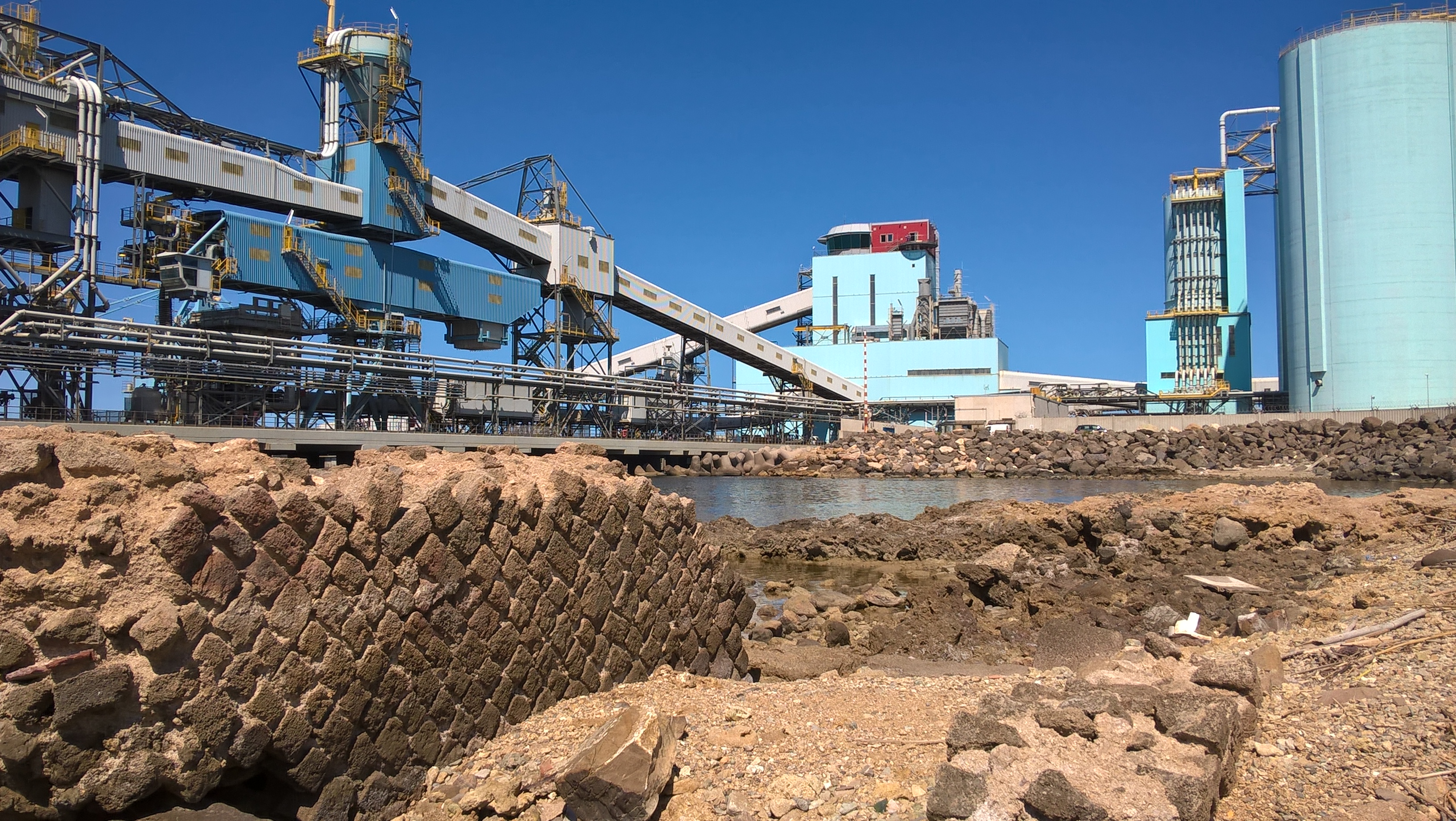


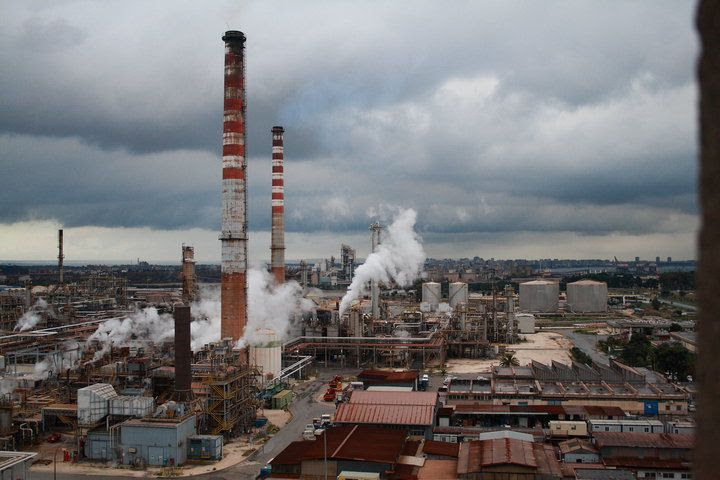
The pictures above show how electricity generated with fossil fuels may affect the environment (The power plants in the pictures are located in Italy). 

Sunday, 25 April 2021

Another country have just banned cryptocurrencies


After many Asian countries had introduced tougher regulation with regard to all use of cryptocurrencies, last week the Turkish Central Bank banned payments in Bitcoin, Ethereum, Tether, etc. According to the Central Bank, cryptocurrencies aren't subject to any central regulatory authority, and their market value can be excessively volatile.

In addition to this, Bitcoin and other cryptocurrencies may be used in illegal transactions due to their anonymous structures. I was astonished to hear that the Turkish Central Bank also said that wallets can be stolen or used without the authorization of their holders. The regulation outlaws the use of  cryptocurrencies to pay for goods and services. Meanwhile, Bitcoin and Ethereum plunged to their lowest level in nearly two months. 

When we own cryptocurrencies we don't have anything in terms of dividends or profit. Cryptocurrency's value only increases when more people participate, and when fewer people participate the value decreases. This is a structure that creates a great deal of risk. 


Thursday, 8 February 2018

Cryptocurrencies' free fall

Since the start of 2018 Bitcoin has lost more than 60% of its value, and other cryptocurrencies have done almost the same during last the five weeks. Meanwhile, some Governments in East Asia, such as China and South Korea, have introduced tougher regulation, and India's policy makers want to ban all use of  cryptocurrencies. With regard to the latter announcement, Bitcoin fell by 12.7 % on Friday, 2nd February. 
We mainly know that Bitcoins is a particular implementation of the blockchain technology, the world's leading software for digital assets, which allows market participants to keep track of digital currency transactions without central record keeping. Each computer connected to the network is considered a node that gets a copy of the blockchain, which is downloaded automatically. Consequently, Blockchain's participants can transfer funds and setting trades without the need for a central authority. The network of nodes validates the user's status and the transaction using known algorithms, and combine the latter with other transactions to create a new block of data, which will be added to the existing blockchain.The major innovation is that the technology allows market participants to transfer assets through the internet without the need  for a centralized third party.
Within the context above mentioned, some experts are talking about similarities between cryptocurrencies and other coins. This is not correct, because when we are speaking about the Euro, the Yen or the Dollar, we are referring them to strong economies, efficient taxation systems and central banks, which allow them to create a particolar value. On the contrary, with regards to Bitcoin and other cryptocurrencies we have no idea who bake them, and who is behind the their value.
As mentioned by Matin Baccardax, from TheStreet.com, when we own a share of a public company, which is freely traded on a stock exchange, just we have a piece of paper which gives us a small portion of the profit going forward. Neverthless  when we own Bitcoin we don't have anything in terms of dividends or profit. Bitcoin's value only increases when more people participate, and when fewer people  participate the value decreases. This is a structure which create a great deal of risk.