Monday, 18 September 2017

2017 Gulf countries' crisis

With regard to the ongoing crisis of Middle East countries, most international experts, diplomats and politicians are talking about mediation as a good process where disputing parties may resolve the conflict. What actually the word "mediation" means in this conflict?
As it is known, four Middle East countries have certain things against Qatar's policy, and three of them are members of the GCC political and economic alliance. Those countries say that Qatar doesn't respect the 2014 Agreement, and they would like a regime change in Qatar. In 2014 Qatar agreed to make a number of changes to its foreign policies, such as restricting Al Jazeera criticism of Egypt, Saudi Arabia and other countries. Qatar also agreed to prevent Doha-based Muslim Brotherhod leaders from appearing on Al Jazeera network. Since Muslim Brotherhood rose to power in Egypt in 2012, conservative monarchies in the Middle East have been dedicating huge resources to prevent the spread of reformist ideologies. It's easy to see that those countries who want to close Al Jazeera and its comprehensive and impartial coverage of events around the world, would like to keep Middle East frozen, in a state of crude oil autocracy.

As above mentioned, this conflict may be resolved through dialogue between disputing parties and diplomatic intevention on the part of UN and perhaps other countries like Kwait. They have to sit down and talk in rational concrete realistic terms about what could be done. Qatar agrees about mediation, but Saudi Arabia, Egypt, UAE and Bahrain insist there will be no solution unless an Agreement on their thirteen demands. Those four countries, which have been severing ties with Qatar since 5th June, mainly have demanded to cut off ties with Iran and stop financing terrorist organizations. That's why  experts, diplomats and politicians are talking about mediation. 

Qatar is not only home of the largest US military base, it also hosts Turkish soldiers. The blockading countries have demanded  Qatar to expelling Turkish troops and shut down Al Jazeera. The Shiite Arab world, and some Middle East countries, such as Turkey, say that Gulf states are violating Qatar's sovereignity. 
In this perspective, the US are in a unconfortable position, considering that, on a one hand, Qatar hosts the largest US military base. On the other hand, the US has recently approved the sale to Saudi Arabia of up to 153 tanks, hundreds of machine guns and other military gear in a deal Worth 1.15 billion Dollar. That's why we have recently seen some changes in the US position: since the last meeting with Kwait's Emir, President Trump has begun to talk about the unity of Gulf countries. And once again we have heard the word "mediation", a process where a neutral third party, such as Kwait or the US, assists others to mediate dispute in the aim to encourage a more equal balance of power in the Middle East, between the Sunny Arab world and the community of Shiites.


Thursday, 14 September 2017

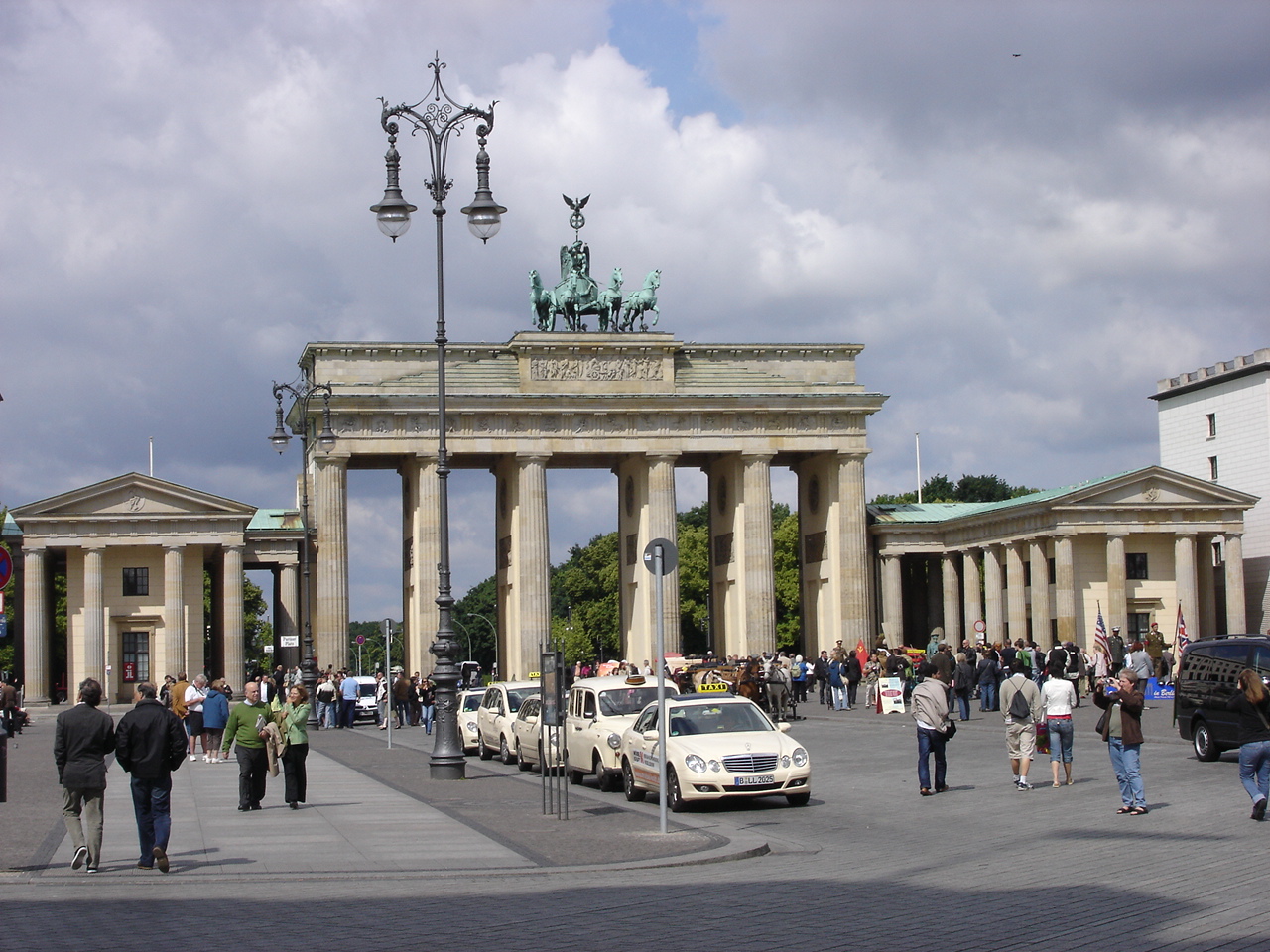
New Bundestag on 24th September

This year, on 24th September, Federal elections will be held in Germany in the aim to elect the new 598 members of the Bundestag. Consequently, the new German Parliament will have to elect a Chancellor with an absolute majority of its members.
According to most surveys, Mrs Merkel is likely to be re-elected, although the populist "Alternative for Germany" party looks set to enter the Bundestag for the first time.
As reported by uk.investing.com on 14th August, if she weren't to win the election, it would be the blackest of black swan". And it's easy to think how the market would be affected by the political shift.


Sunday, 10 September 2017

The only religion with a doctrine of warfare

In 2015 during a coordinated suicide bomb-attack 130 people were killed in Paris and St. Denis, and a suicide bombing in Belgium killed 32 civilians. On 14th July, 2016, 86 people were killed in Nice while they were celebrating Bastille day. And this year attackers in London, Manchester, Berlin and Barcelona killed 62 people.
 
Considering the amount of people  killed in Western countries by Islamist  extremists, we may argue that those bomb-Attacks can't be categorized as terrorism. The use of violence, which we have seen in the last three year in Paris, Brussels, Manchester, Barcelona, London and Berlin, isn't in order to achieve political aims or to force  the government to do something. It's really a war. According to Robert Spencer, "Islam is not  moderate or peaceful. It's the only religion with a doctrine  of warfare".

Sunday, 20 August 2017

Markets are always right

After President Trump had took place at the White House, he began to use social networks in the aim to create a negative impact on some companies listed on the stock markets. Unfortunately, he was able to affect the markets by leaving statements through twitter.
For instance, last year on 23rd December Lockeed Martin's stocks fell by 5 per cent  after the U.S. President had written a tweet about the cost of the F-35 jet program. And when President Trump wrote that  Obama's Air Force One 747 was too expensive, "Boeing Co" lost about two Billion of its capitalization on the stock market. As many of the Presidents before him, Obama had maden numerous comments about his affinity for  Air Force One.
On the contrary,  since this month investors haven't been taking seriously Trump's statements left on social networks. Last Wednesday, after the President had written bad news about Amazon.com, the stocks of the most valuable retailer in the U.S. surprisingly rose. it seems that Trump's tweets don't affect the markets any more.
As it is known, most investors, such as hedge fund money managers, are analyzing all the time world news. In this perspective, since U.S. President was elected in 2016 they have been thinking what Trump's tweets mean for the market. At the moment, Donald Trump's statements are not able to influence the markets, as we have seen with regard to invocation of "fire and fury" in response to North Korea's nuclear weapon program. It's easy to see how the markets ignore President Trump's statements. 

Monday, 24 July 2017

U.S. stock markets' Record highs

I still don't understand why the U.S. stock markets keep smashing records. The all-time high, which Dow Jones, S & P 500 and Nasdaq have hit since Trump victory, may be related to President's promises of tax reform, deregulation and infrastructure spending. Moreover, European economy has started to gather momentum.
From another point of view, with an unemployment rate of at 4%, low interest rates and steady economic growth, the U.S. stock markets managed record highs. Moreover, European Union has started to gather momentum, and reports about the second quarter 2017 may elicit solid number better than expected.

As a result, We may find that we don't really need to listen to all those  analysts  and columnists who like to explain why the markets did what they did during the last nine months. A former technical analyst for CNBC, John J. Murphy, reminds us that a lot of experts didn't see the housing bubble bursting in 2007 until it was too late. That's why it's better looking at the markets instead of listening to the experts. All that really matters is what the markets are actually doing.   

Sunday, 16 July 2017

A little air is coming out of the balloon

It seems that since 9th June a lot of people, such as investors, individual traders, market experts and columnists have been waiting for a new periodic crisis of the markets. As we saw in the first decade of last month, after major Wall Street indexes had touched new highs, the money began to flow out from the U.S. Stock Markets. Somebody said "a little air is coming out of the balloon".
For instance, U.S. chipmakers are aware that technology stocks have been on a all time high for a very long time. Actually, we could see "a rotation" as money may go out of  Stock Markets into other sectors.

Sunday, 25 June 2017

Middle East Snapshot

Three weeks ago, on 5th June, Saudi Arabia, Egypt, UAE and Bahrain decided to completely sever ties with Qatar. And some experts have been calling this the biggest political crisis to hit the Middle East in years.
In the aim to end the Qatar's crisis with Saudi Arabia and Gulf neighbors, last week the four Arab countries, that imposed a regional embargo on Qatar, issued list of demands which included shutting down the Al Jazeera, the Qatar's state-backed media network.
In my opinion, everybody who wants to keep Middle East frozen, in a state of crude oil autocracy, would like to close Al Jazeera and its usual comprehensive and impartial coverage of events around the world.